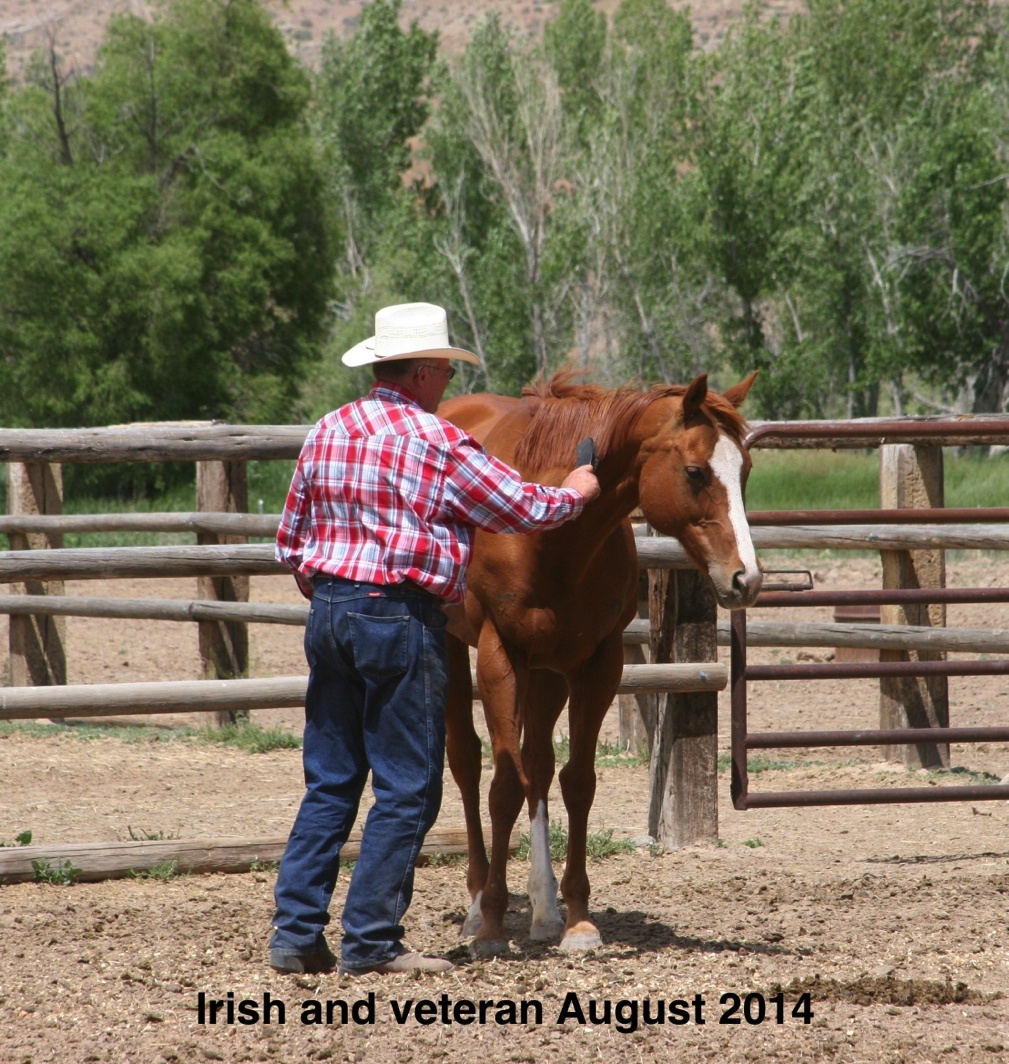
The volunteers at CANTER California are excited to share this story of Irish Delight, a 15-year-old chestnut mare who, despite being returned to Canter California several times for behavioral issues, and has found her calling as a therapy horse. Like so many of the wonderful horses we are able to re-home, Irish serves as an ambassador for her breed, the racing industry, and her fellow retired racehorses demonstrating the diversity, intelligence, and heart of the thoroughbred to everyone she meets.
Irish Delight, aka Irish (Slewpy out of Lady B. Strong, by Irish Stronghold), was adopted from Canter in April of 2014 by Rainhorse Equine Assisted Services, an equine assisted activities and therapies (EAAT) program located in Wyoming’s Big Horn Basin. Rainhorse provides therapeutic services to veterans, incarcerated youth offenders, at-risk children, and women with the help of horses who have experienced hardships of their own. The program is run by Maria Eastman, who says, of Irish “She is a delight! We just love her. She is a lovely girl, with a huge heart, and honest as the day is long.”
Rainhose cares for a heard of nine horses that include mares and geldings of various breeding. Upon arrival in Wyoming, Irish felt immediately at home with the other horses, and was quickly “adopted” by Maria’s big warmblood gelding, who makes sure she is well looked after. In a typical week, Irish does therapy work for two or three days and is ridden once or twice to maintain her fitness. Irish often travels off the farm with two or three other horses to visit treatment centers in the surrounding area. When Irish is not working, she spends her day turned out in a large pasture with the rest of the horses.
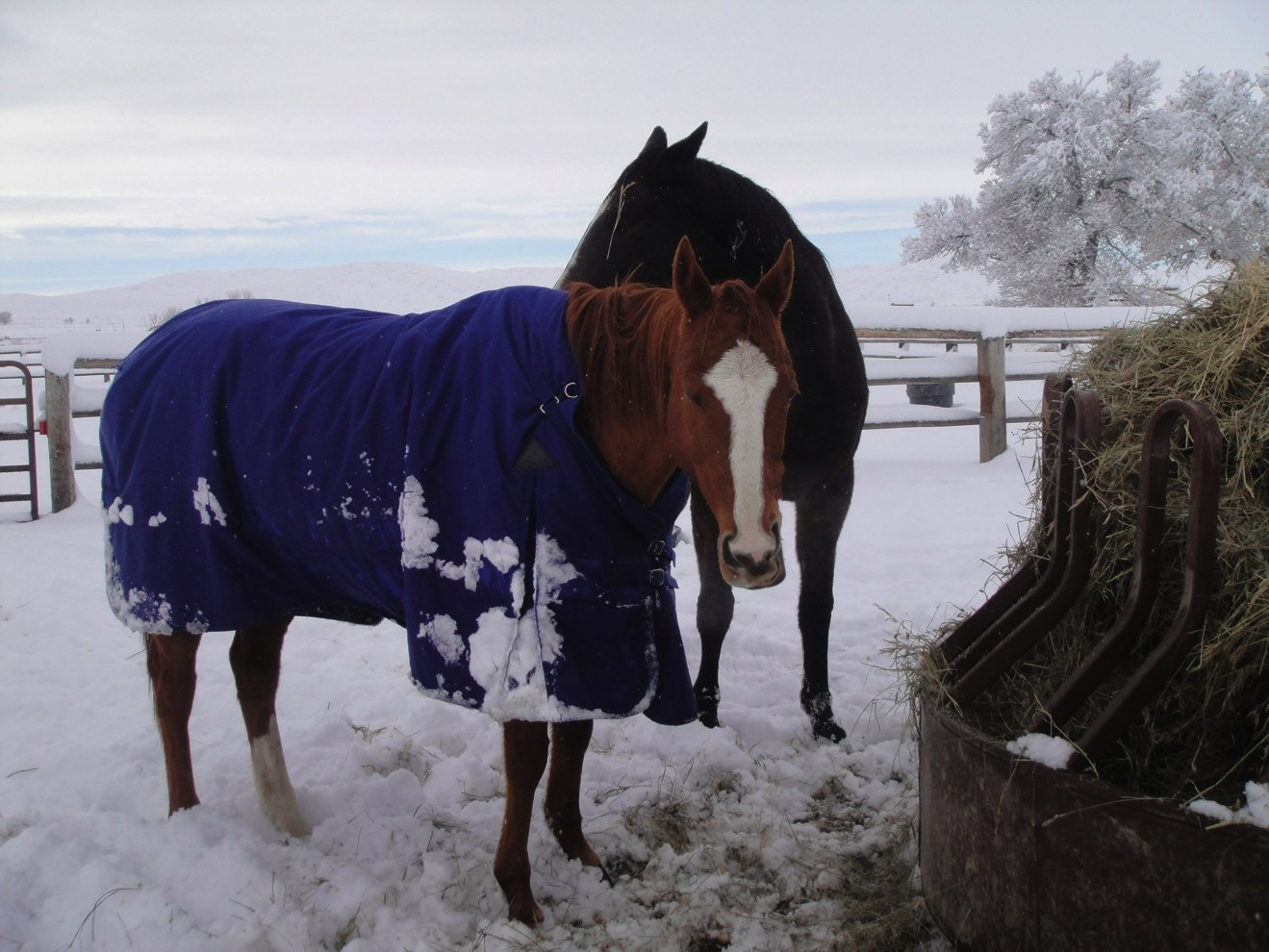
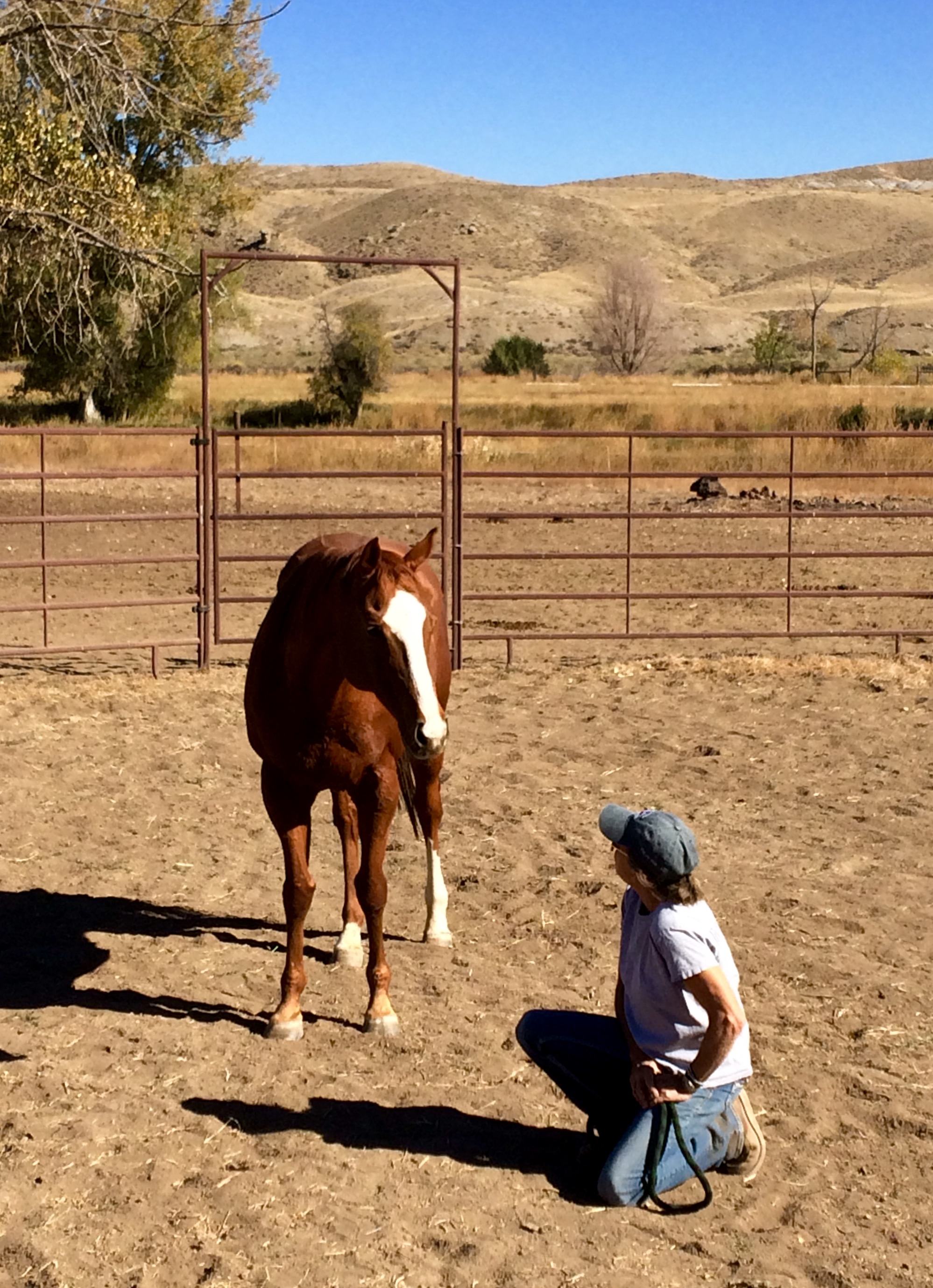
Irish with one of her pasture buddies.
But things weren’t always so easy for Irish. Over the course of several years, Irish had been adopted from CANTER California three separate times, having been used as a broodmare, a show horse, and a kid’s summer camp horse. Each time she was returned due to multiple behavioral issues, including extreme separation anxiety. Maria says she was drawn to Irish because “[a]lot of the kids I work with in my program might be thought of as hopeless. I think a lot of people thought of Irish the same way. Since I do not believe that they are, I could not believe that she was, either. And turns out, none of them are hopeless.” Over time, all of Irish’s issues have greatly improved and Irish has become more trusting of people as a result of regular groundwork with Maria, who uses natural horsemanship techniques to improve her confidence.
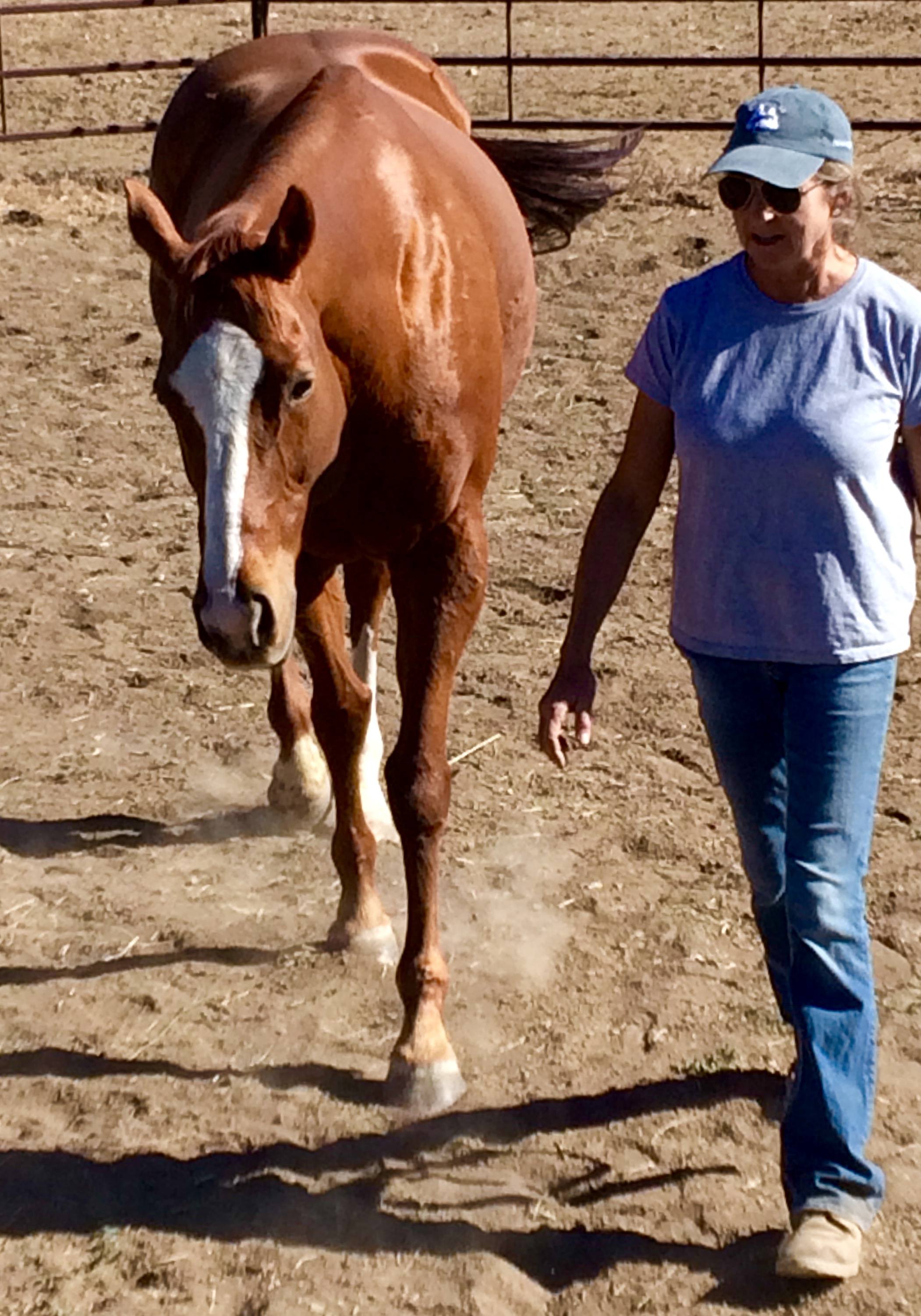
Maria says Rainhorse is very welcoming of horses like Irish in their program as it can enhance therapy sessions when a client is made aware that horses can have troubles in their lives, too. And so, Irish’s story, becomes one that many of the troubled youth, veterans, and women participating in the program relate to. Rainhorse has another OTTB that was adopted from it’s racing trainer off the Canter Colorado trainer listings. Maria says “People are always surprised that we like to have OTTBs working for us. They think that they are too high-strung, too “crazy” [or] too tall. We think they are splendid in this work, and would welcome the opportunity to share that with others.”
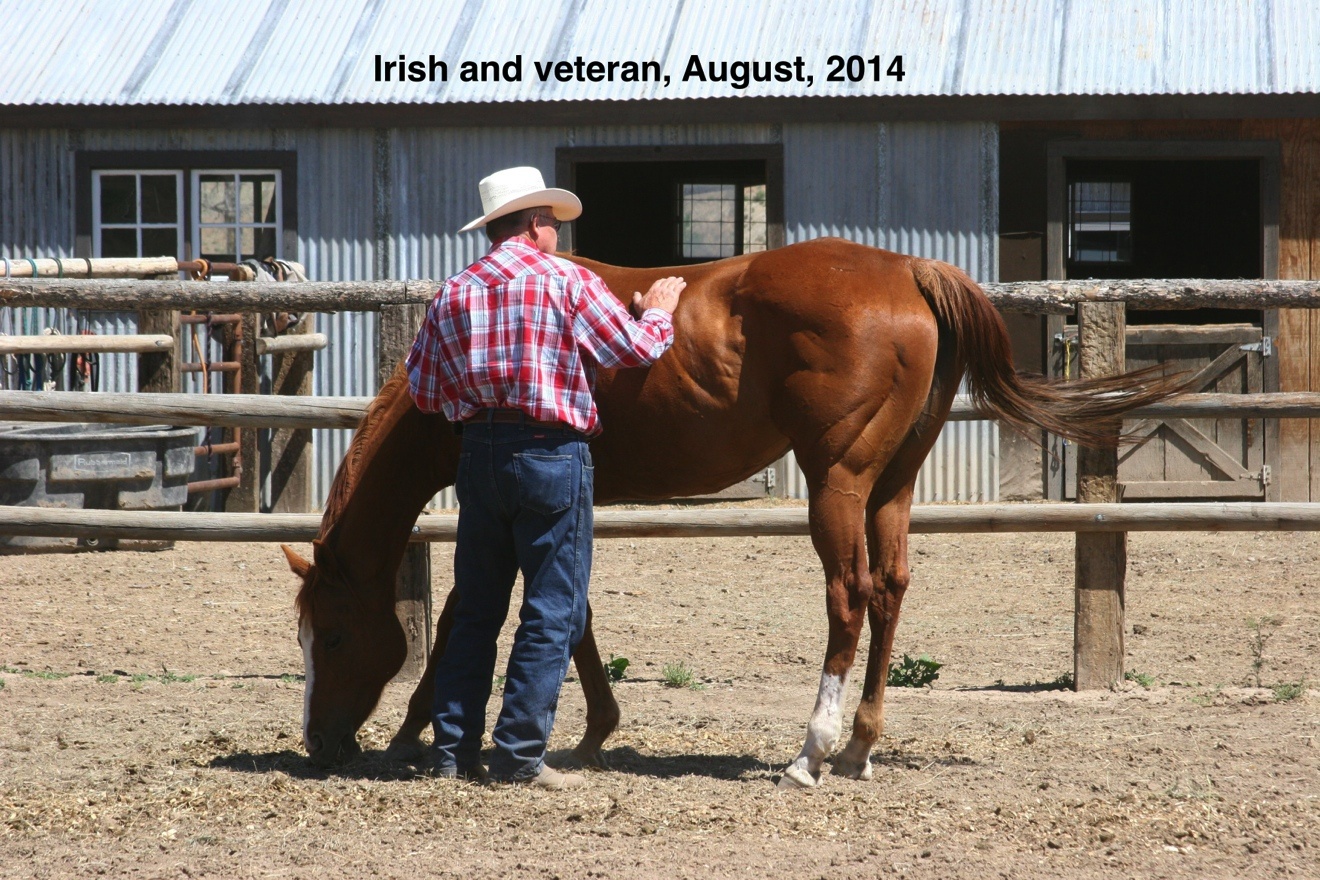
The following excerpt is a story that Maria recently shared with us, that illustrates the special bond that these clients develop with Irish, and the other horses in the program, and how that relationship aids them in their recovery process.
“Once a week, Irish and her seven herd-mates welcome a group of adolescent boys to their home at the Oxbow Ranch in Wyoming. These boys are residents at a substance-abuse treatment center nearby, and they have been through a lot of trouble and hurt before they got there.
The horses and the boys form pairs- and continue to work with the same horse over a period of several months. Irish and her partner were quickly drawn to each other, and bonded immediately. So much so that wherever her partner went, Irish would follow. They travelled far and wide; their only restriction was not to go through a closed gate or over a fence. They walked, trotted, stopped, turned. Stood sleepily together. Walked away from the other horses (truly remarkable for Irish, who suffers from EXTREME separation anxiety), came back calmly. Went for a drink of water. Irish never wandered, or became distracted. Whenever we would look up, they were somewhere new, always together. And part of the wonderful thing was, the lead rope was tossed over her back- he didn’t need it because their connection was through the heart.
Irish’s partner got better and got to return home. The first day he did not arrive at the ranch was a little sad for us to watch. Irish came eagerly into the arena where to boys would first work with their horses, clearly anticipating seeing her friend. But he wasn’t there. Our hearts were saddened for her, even though we were happy for his progress. Hopefully, he will come back to visit his therapist and friend, Irish.”
If you would like to know more about equine assisted therapy, you can visit the Professional Association of Therapeutic Horsemanship International (PATH Intl.) website at http://www.pathintl.org/. If you would like to see more of the great work being done at Rainhorse, you can visit their website at http://new.rainhorse.org/, or follow them on Facebook and Twitter.